 DjamgaMind Bedtime
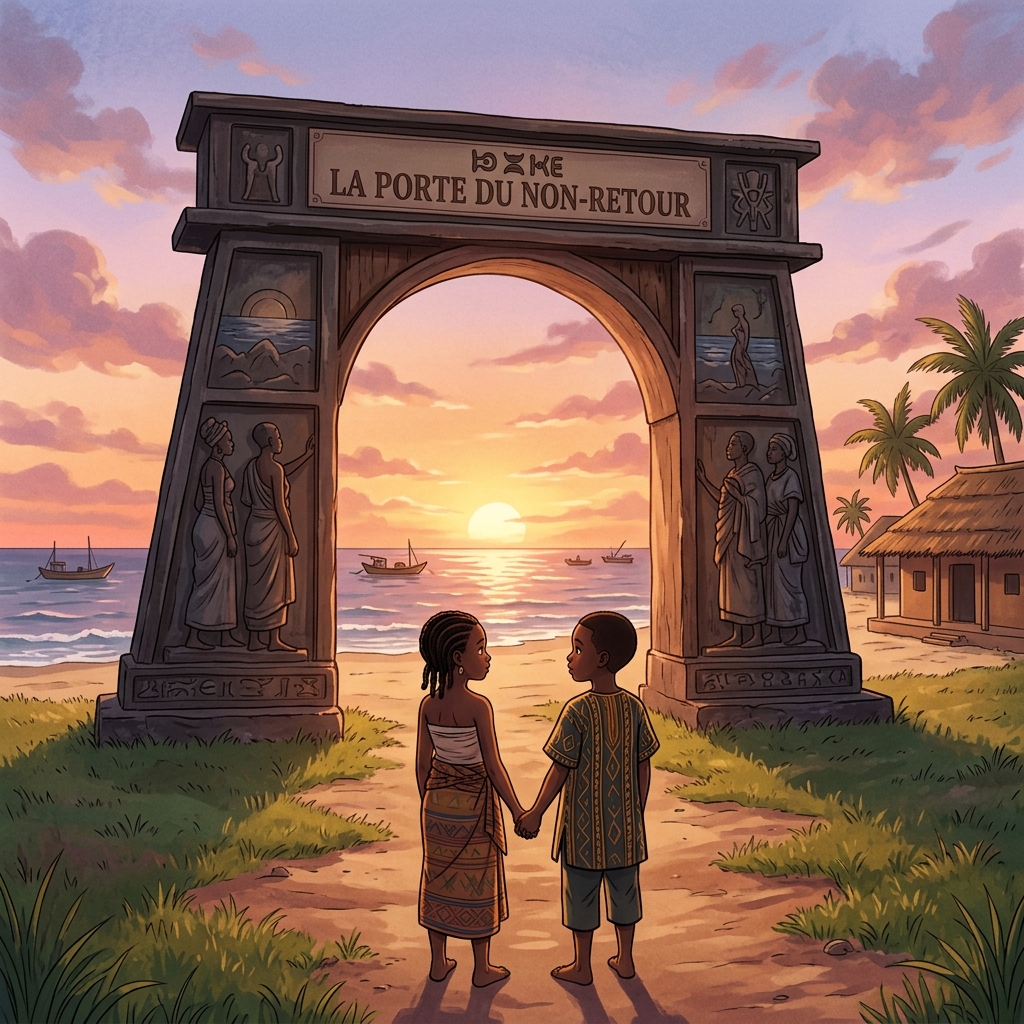
In the country of Benin, in West Africa, there is a town called Ouidah, and in Ouidah there is a long sandy road that leads down to the sea.
Long ago, that road was walked by people who were being taken away from their homes and put onto ships. They could not come back, and that should never have happened to them.
At the end of the road, where the sand meets the water, there is an archway. For a long time people called it the Door of No Return, because of that sadness.
But here is the part of the story that matters most.
The people who were taken did not disappear. They arrived in faraway places — Brazil, Haiti, Cuba, the United States — and they carried what they knew with them. Their drums. Their cooking. Their way of telling stories. Their names for things. All of it took root and grew, and it is still growing today.
And now their families come back. Every year, people whose great-great-grandparents walked that road come to Ouidah to see where they began. So the town planted a second archway, further along, and gave it a new name.
They call it the Door of Return.
Under it, drums are played and people dance and there is a great deal of hugging, because somebody's family has come home after a very long time away.
Goodnight. The drums are still playing somewhere.