 DjamgaMind Bedtime
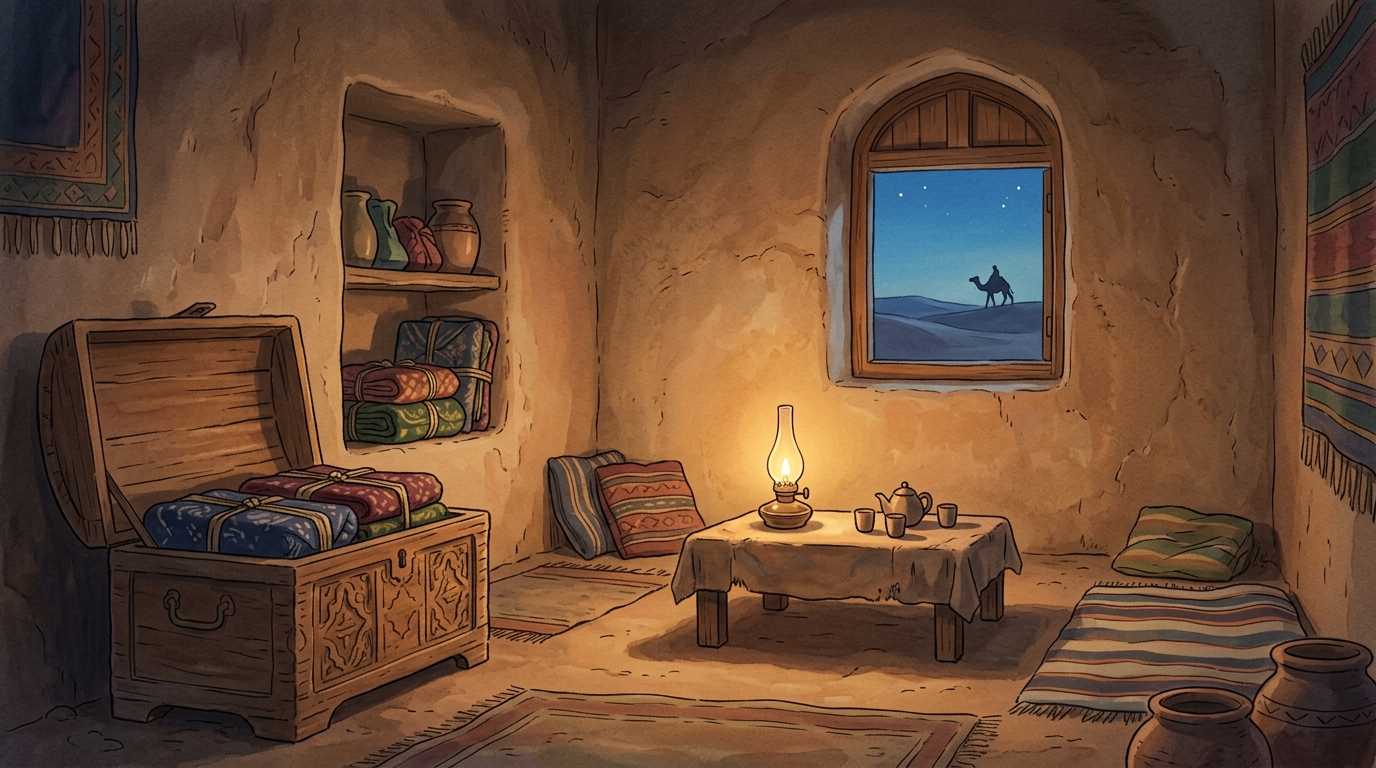
Far out where the sand begins, in Mali, there is a city called Timbuktu.
Long ago it was one of the busiest places in the world. Camels arrived carrying salt in slabs like paving stones. They left carrying gold. And in between the salt and the gold, something quieter was being traded, something worth more than either.
Books.
Timbuktu had a great university and thousands of students, and scholars there wrote and copied books by hand — about medicine, about the stars, about law, about poetry, about how to settle an argument between neighbours. Some pages were decorated with gold. A traveller once wrote that books were the most profitable thing sold in the city.
Then times changed, and the great libraries closed.
But the families of Timbuktu did not let the books go. They took them home. They wrapped them in cloth and hid them in wooden trunks, in cupboards, in holes beneath the floor, and they passed them quietly from parent to child for hundreds of years.
Nobody outside knew how many there were.
When at last the trunks were opened and counted, there were hundreds of thousands of them. A whole library, saved one family at a time.
So somewhere tonight, in a quiet house at the edge of the desert, there is a very old book wrapped in cloth, still being looked after.
Goodnight, little reader.